
Services
Services
Modern diagnostic and endoscopic examinations, with an emphasis on safety, comfort and quality.
01
Service
Clinical examination & appointments
Starting with a full medical history and a clinical examination, we can investigate acute, subacute and chronic conditions of the gastrointestinal system and the liver.
Where needed, the clinical examination is complemented by point-of-care ultrasound (POCUS), allowing immediate additional assessment.
Our clinic operates by appointment only, so that every patient has the time they need, and to avoid unnecessary waiting and crowding in the waiting room.
What to bring with you
For the best possible assessment, please bring recent test results to your appointment, such as blood tests and imaging, as well as the results of any previous endoscopies. To complete the process, please also bring your AMKA (Greek social security number) or, if you have one, your European Health Insurance Card.
02
Service
Gastroscopy
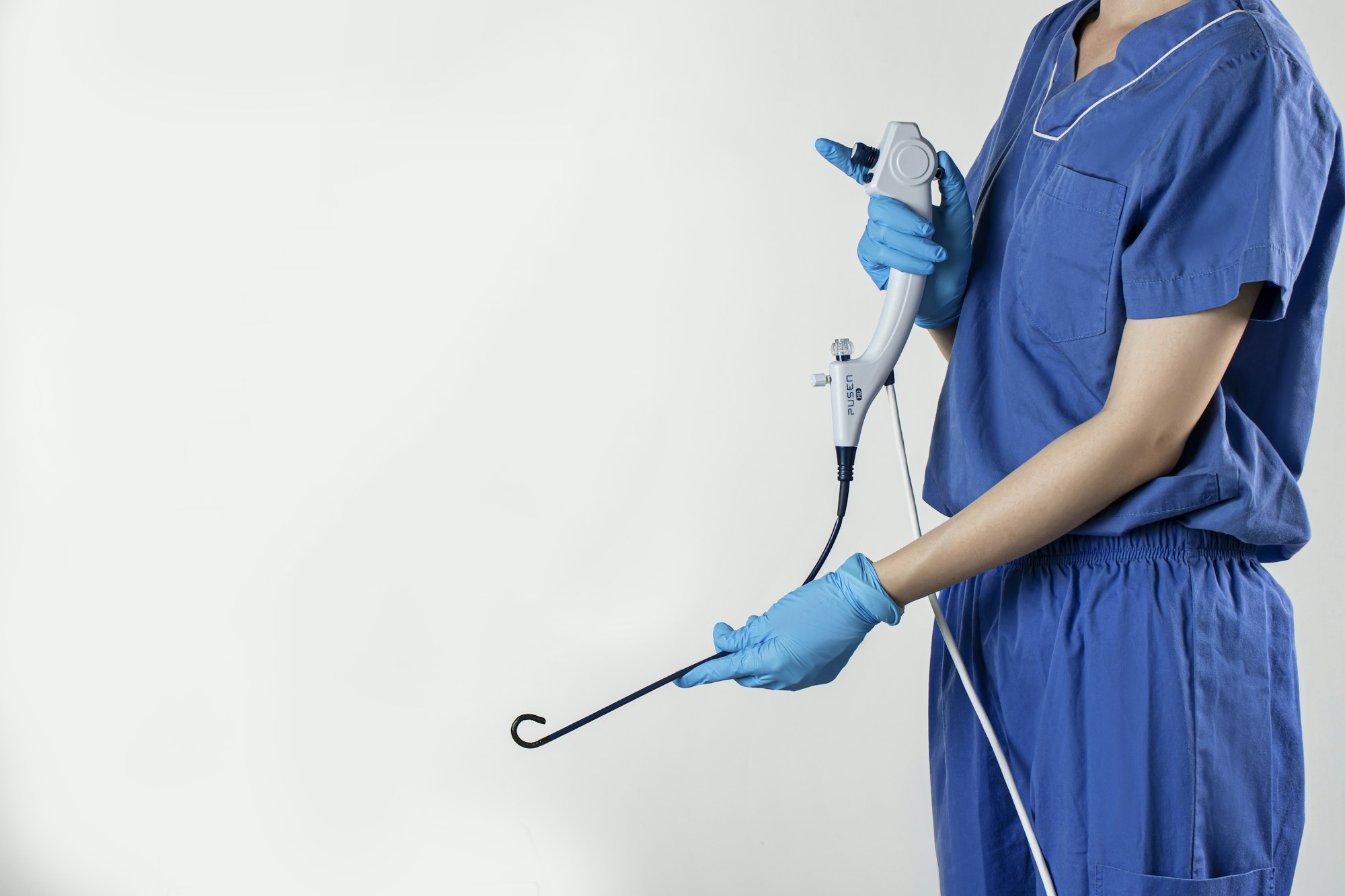
Upper gastrointestinal endoscopy is performed at our center using modern methods, with an emphasis on safety, comfort and the quality of the examination.
01
Modern intravenous sedation, aiming for a comfortable and painless experience for the patient.
02
Continuous monitoring of vital signs throughout the examination, with monitor, oximetry and capnography.
03
Latest-generation endoscopes, for high-quality imaging and a detailed examination of the upper digestive tract.
Gastroscopy allows a detailed examination of the esophagus, stomach and duodenum. During the examination, samples may be taken to test for Helicobacter pylori, as well as biopsies of the mucosa when necessary.
After the examination, once the patient has recovered from sedation, the doctor gives a detailed explanation of the findings. The patient can also view the images recorded during the examination.
Preparation for gastroscopy
Gastroscopy requires fasting from solid food from the morning of the examination. Fluids must be stopped at least two hours before the examination, according to the instructions you will be given when scheduling your appointment.
03
Service
Colonoscopy
Colonoscopy is performed at our center using modern methods, with an emphasis on safety, comfort and the quality of the examination.
01
Modern intravenous sedation, aiming for a comfortable and as painless an experience as possible for the patient.
02
Continuous monitoring of vital signs throughout the examination, with monitor, oximetry and capnography.
03
Latest-generation endoscopes, for high-quality imaging and a detailed examination of the large intestine.
Colonoscopy allows a detailed examination of the entire large intestine and the final part of the small intestine, with direct assessment of the mucosa. During the examination, biopsies can be taken from areas with abnormal findings, and polyps can be removed when necessary.
Colonoscopy is an important examination both for investigating symptoms and monitoring known bowel conditions, and for screening and early detection of precancerous lesions and colorectal cancer.
After the examination, once the patient has recovered from sedation, the doctor gives a detailed explanation of the findings. The patient can also view the images recorded during the examination and learn about any biopsies or other endoscopic procedures that were performed.
Preparation for colonoscopy
Proper bowel preparation is an essential prerequisite for a safe and reliable colonoscopy. Preparation includes a special diet and a laxative preparation, following individualized instructions you will receive before the examination.
Following the preparation instructions exactly is especially important, since a well-cleansed bowel allows the best possible visualization of the mucosa and reduces the chance of missing small lesions or polyps.
On the day of the examination, the instructions on fasting and fluid intake must be followed, together with any special instructions regarding medication, especially for patients taking anticoagulants or diabetes medication.
04
Service
Polypectomy
Polypectomy is an important part of colorectal cancer prevention.
During colonoscopy, polyps may be found in the large intestine. Most polyps are benign, but some may, over time, develop into precancerous lesions and, more rarely, into colorectal cancer.
Polypectomy is the endoscopic removal of polyps during colonoscopy. Depending on the size, shape and location of the polyp, the appropriate endoscopic technique is chosen for its safe and complete removal.
At our center, polypectomy is possible for most polyps, either during the initial colonoscopy or at a second session, depending on the characteristics of the polyp and guided by convenience and, above all, the safety of the patient.
The removed tissue is sent for histological examination, which identifies the exact type and characteristics of the polyp and helps determine further follow-up. Early detection and removal of precancerous polyps can prevent them from becoming malignant.
After the examination, the patient receives a detailed explanation from the doctor about the findings, the polyps that were found and removed, and the need for further follow-up, depending on the results of the histological examination.
05
Service
Intestinal ultrasound
A modern, non-invasive, radiation-free method for the immediate assessment of the bowel (Intestinal Ultrasound, IUS).
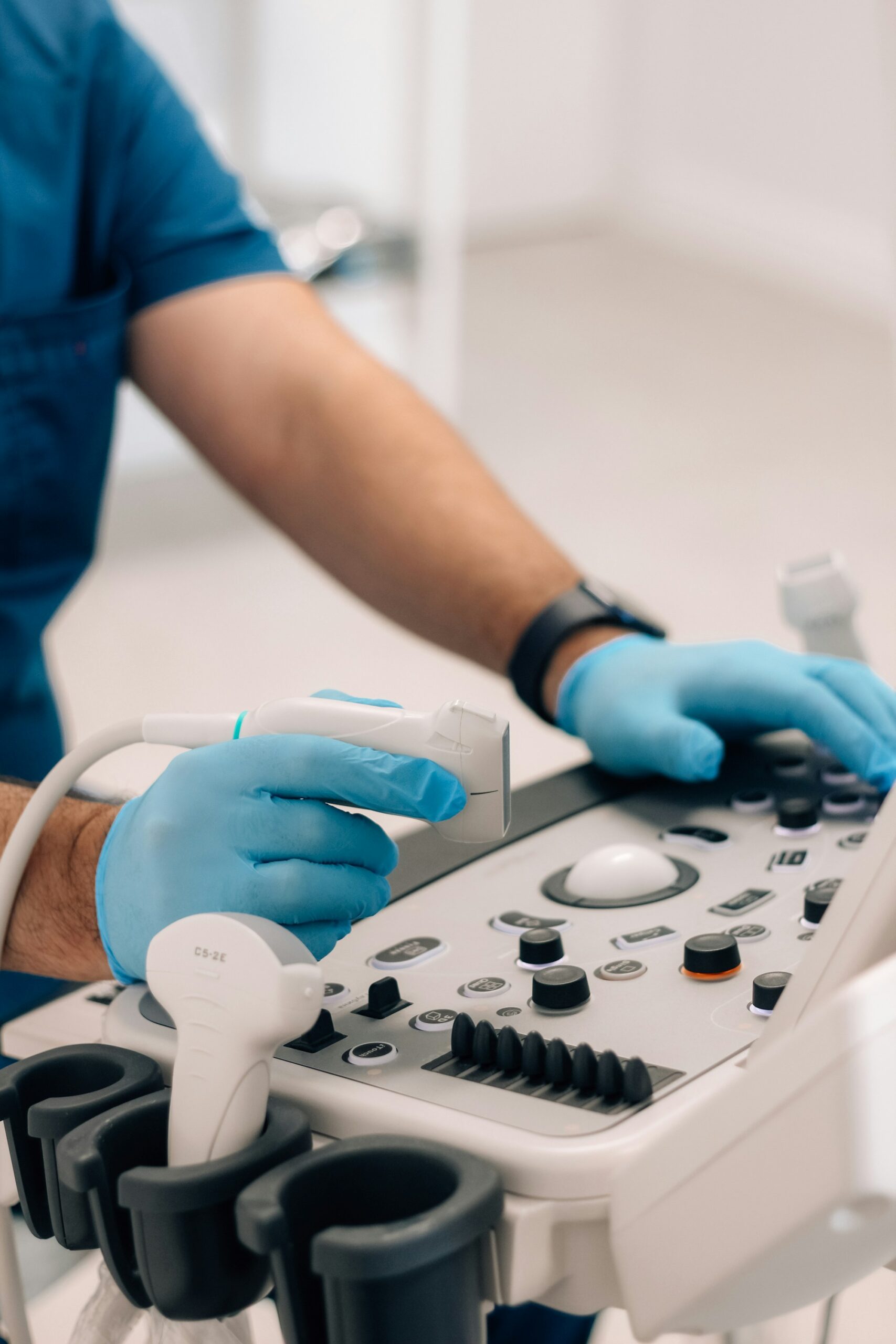
With specialized ultrasound equipment, the bowel wall can be imaged in detail and the presence and extent of inflammation can be assessed. It is particularly useful in the diagnosis and monitoring of inflammatory bowel diseases, such as Crohn's disease and ulcerative colitis.
One of the most important advantages of the method is that it is performed immediately at the clinic, without radiation and, in most cases, without any special preparation. It can therefore be repeated whenever necessary, allowing close monitoring of the course of the disease and the response to treatment.
Intestinal ultrasound can be used in addition to clinical examination, laboratory tests and endoscopy, providing an immediate and objective assessment of the condition of the bowel.
Specialisation
Specialisation in intestinal ultrasound: IBUS
The doctor has completed the full training program of the International Bowel Ultrasound Group (IBUS), an international scientific organization active in the education, research and clinical application of intestinal ultrasound.
The training includes theoretical and practical instruction, extensive hands-on training at a specialized center, and advanced training in the modern applications of intestinal ultrasound, with an emphasis on the diagnosis and monitoring of inflammatory bowel diseases.
The doctor was also one of the first members of IBUS in Greece, taking part from the early stages in the development and dissemination of the method in the country.
This specialized training and experience make it possible to use intestinal ultrasound in everyday clinical practice, particularly for the objective and repeatable assessment of patients with Crohn's disease and ulcerative colitis, as well as other bowel conditions.
06
Service
Shear Wave Liver Elastography
Shear Wave Elastography (SWE) is a modern, non-invasive ultrasound method for estimating the stiffness of the liver tissue and, by extension, for the non-invasive assessment of the degree of liver fibrosis.
Our center offers this examination as part of hepatological assessment and follow-up, since elastography is an essential tool of modern hepatology.
01
Painless, quick and non-invasive, with no radiation.
02
Performed as part of the liver ultrasound examination.
03
Can be repeated during follow-up when needed.
During the examination, special ultrasound waves generate and detect shear waves within the liver tissue. Their propagation speed is used to calculate liver stiffness, providing quantitative information that can help stage fibrosis.
It is a useful tool for assessing and monitoring patients with chronic liver disease, such as metabolic dysfunction-associated steatotic liver disease (MASLD), viral hepatitis and other chronic liver conditions.
Elastography does not replace clinical assessment or laboratory tests, but is an important part of the modern non-invasive evaluation of liver fibrosis and can help identify patients at increased risk of advanced fibrosis.
By appointment only
Book your appointment
The clinic operates by appointment only, so that every patient has the time they need and unnecessary waiting and crowding in the waiting room are avoided.